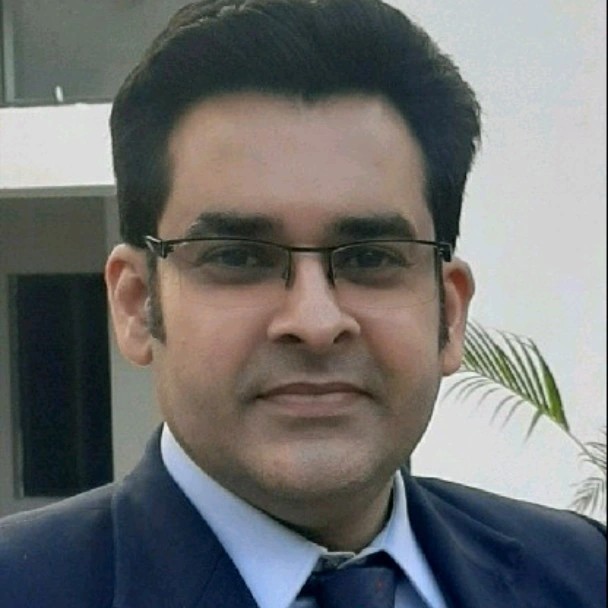
Mr. Arun Bohra
Catalyzer, Franklin Covey Institute
“This workshop is not about coaching. It is about how our leadership responses shape the culture of our community.”On what the session is really about
Session recap
Coaching isn't a skill you add. It's the default language that decides whether your school can run without you.
The FranklinCovey Catalyzers opened by picking up exactly where Kanak Gupta's keynote had ended: are we creating dependents? The workshop, they were clear from the first minute, was not about coaching technique. It was about a harder question — how a leader's everyday responses, repeated over a year, quietly build either a shrinking system or an expanding one. They began by asking the room what each principal wanted to walk away with. The answers — "what does coaching look like in practice," "how does a leader build a mentoring culture that sustains," "coaching can't be one-size-fits-all" — became the spine of the next two hours.
The first framework was the 6 Levels of Engagement, drawn as a ladder with a line through the middle. Below the line: rebel or quit (resistance, withdrawal), malicious obedience ("I did exactly what I was told"), and willing compliance ("tell me what to do and I'll do it"). Above the line: cheerful cooperation, heartful commitment ("I genuinely care about succeeding"), and at the top creative excitement ("I want to build this with you"). The provocation: what percentage of your team lives below the line versus above it? Below the line is a shrinking system. Above it is an expanding one.
They made it physical. Seven volunteers formed a circle around one "principal," and the facilitators read six everyday scenarios — a parent complaint that needs escalating, an event plan awaiting approval, two departments that won't make a call, a section head who "just wanted to confirm," an initiative that dies the moment monitoring stops, a teacher who reports a struggling colleague rather than addressing it. With each scenario, the team stepped toward the centre. The room watched ownership, accountability and thinking visibly shrink into one person. Then the self-assessment from the pre-read landed the same point privately: the more your honest answers cluster at "often" and "always," the more dependency you have built — and the work of the session was to move those answers back toward "rarely."
“The behaviours that make a leader effective — solving fast, protecting the team, making the call — are often the exact behaviours that make the team dependent. You feel productive. Over time, you are building dependency.”
The diagnostic turn was the See-Do-Get cycle, taught through a trick. "Draw a square with three lines." The room declared it impossible — a square has four lines — until one participant drew three lines and let the table edge complete the square. The point: the way we see a situation (our paradigm) drives the way we act (our practice), which drives the result we get. A leader who sees themselves as the solver, protector, decision-maker and clarifier will get a dependent team — and then point to the dependency as proof they were needed. They demonstrated the self-fulfilling loop live: a "boss" who fundamentally distrusts the team micromanages, the team rebels, and the distrust is "confirmed."
The reframe was a new paradigm of the leader: not someone who solves problems, ensures compliance and carries responsibility, but someone who builds thinking, develops judgement and strengthens ownership. A leader who asks better questions instead of giving answers, who returns ownership instead of absorbing it, who shapes tomorrow's leaders instead of fixing today's issues. They illustrated with a classroom parallel: when a child gives a wrong answer and the teacher simply says "wrong, anyone else?", the child stops thinking and stops volunteering. Ask instead, "how did you get to that answer?" — and you have built a thinker.
The practical toolkit was the Four-Level Conversation Filter. Every time a team member brings you something, they are carrying one of four gaps. An information gap (they lack clarity) — guide them. A thinking gap (they're stuck in perspective) — mentor and instruct. An ownership gap (they know exactly what to do but want you to co-own the risk) — return the ownership. A courage gap (they have the skill and the answer but fear failure or authority) — reinforce confidence and trust. The room debated, productively, how hard it is to tell ownership and courage apart — the facilitators' answer was that only you, with a specific person in mind, can decode it. Paired with a 90-Second Coaching Reset, the message was simple enough to use from the next morning: replace "do this" with "what are you thinking?" Build thinking over control, ownership over rescue, growth over immediate comfort. The closing image said it best — they had the room hold a "problem" in an open palm, then turn the hand over: coaching is not holding the problem. It is handing it back.
Editorial summary compiled by the LDP team — not a verbatim transcript. Spotted an inaccuracy? Let us know.
Key takeaways
- 1
Know where your team lives
The 6 Levels of Engagement run from "rebel or quit" up to "creative excitement," split by a line. Below it is compliance; above it is ownership. Most of your team sits somewhere — and that location is a shrinking or expanding system.
- 2
Dependency is built one approval at a time
The circle exercise made it visible: every everyday decision a leader absorbs pulls ownership, thinking and accountability toward the centre. It rarely looks dramatic — it looks like "just checking with you first."
- 3
Your paradigm becomes your result
See-Do-Get: how you see a situation drives how you act, which drives what you get. "Draw a square with three lines" felt impossible only because of conditioning. Audit the paradigm before you audit the team.
- 4
Swap the solver paradigm for the builder paradigm
Stop seeing yourself as the one who solves, protects, decides and clarifies. Start seeing yourself as the one who builds thinking, develops judgement and strengthens ownership. The shrinking system expands.
- 5
Diagnose the gap before you respond
Four gaps, four responses: Information → Guide. Thinking → Mentor. Ownership → Return ownership. Courage → Reinforce trust. The wrong response to the right gap deepens dependency.
- 6
Replace "do this" with "what are you thinking?"
The 90-Second Reset in one line. Asking instead of telling hands thinking, ownership and courage back to the person. Build thinking over control, ownership over rescue, growth over comfort.
What he spoke on
The 6 Levels of Engagement
Rebel/quit · Malicious obedience · Willing compliance | Cheerful cooperation · Heartful commitment · Creative excitement. Below the midline is a shrinking system; above it is an expanding one. The goal is to move the team above the line — ideally to creative excitement.
Shrinking vs expanding systems
A shrinking system routes every decision to one person and collapses when that person leaves. An expanding system distributes thinking and ownership so the school keeps breathing in the leader's absence.
The See-Do-Get cycle
Paradigm → practice → result. We act on how we see, not on what is true. "A square with three lines" is impossible only inside a conditioned paradigm. Change the lens and the result changes.
The wrong vs right leader paradigm
Wrong: solve problems, ensure compliance, carry responsibility, fix today. Right: build capacity, ask better questions, return ownership, shape tomorrow's leaders. Same leader, opposite culture.
The Four-Level Conversation Filter
Information gap → Guide. Thinking gap → Mentor & instruct. Ownership gap → Return ownership. Courage gap → Reinforce confidence. The skill is decoding which gap a person is actually bringing you.
The 90-Second Coaching Reset
A pocket tool for the moment a problem lands on your desk. "What are you thinking?" / "What would you try first?" / "What ownership stays with you?" Use it for a month and coaching becomes your default language.
Q&A captured
Q. How is coaching customised — one size doesn't fit all?
It isn't a script. The Four-Level Filter exists precisely because different people bring different gaps. The same person can bring an information gap on Monday and an ownership gap on Friday — you read the person, not a template.
Q. Ownership gap vs courage gap — how do I tell them apart?
Thin line. In a courage gap, the person comes with a solution ("this is what I've thought, I just want to reconfirm") — they've crossed the decision and only fear the implementation. In an ownership gap, they come with the same problem repeatedly, fully understanding it, but using language that shifts the risk onto you. Only you, with a specific colleague in mind, can decode which it is.
Q. Isn't "what do you want me to do exactly?" just an information gap?
Not if you've already trained them on the initiative. If clarity was given and they're still stuck, it's a thinking gap shading into an ownership gap — they may not want to carry the decision. Reinforce ownership with questions, don't re-explain.
Q. Doesn't a leader sometimes have to step in and fill the gap?
Yes — "the job of a leader is to fill the gap, not find the fault." But filling a gap once is support; absorbing every gap permanently is how you build a dependent team. Know the difference.
Q. What kind of leadership keeps people in "creative excitement"?
The room's own list: trust, delegation, space to make mistakes, treating mistakes as a learning curve, asking for their input on decisions, leading by example, reinforcing confidence. In short — agency. The biggest part of culture-building is giving agency to the people you work with.