
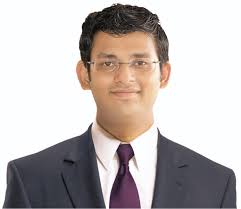
Mr. Kanak Gupta
Director, Seth M. R. Jaipuria Schools
“It will not be technology, infrastructure or curriculum that defines schools. It will be the culture — and that culture comes from us, the leadership at schools.”On what actually differentiates a school
Session recap
Three days, one question: what does it truly mean to lead a school in 2026?
Mr. Kanak Gupta opened JLP 2026 by reframing the gathering itself. This was not a conference to attend, he said — it was a working room of school CEOs, and the only currency that mattered for three days was candour. He thanked principals for the inspiring work they do every day in their individual capacities, acknowledged how difficult it is to speak transparently to people you work so closely with, and set the tone: bring real questions, not polished answers.
He then offered a sense of scale. A network that was 60 schools, 55,000 students and 3,000 educators at last year's JLP will, by the next meet, be close to 90 schools, over 100,000 students and 5,000 educators across six-plus states — with international interest already on the table. Behind that growth sits a weightier number: 100,000 students translate to roughly 300,000 people whose lives depend on decisions taken in this room.
The keynote pivoted on a single worksheet. Twenty statements about society, drawn from the lived reality of 1947 — cigarettes in closed cars with children, alcohol to make babies sleep, teachers as the sole source of knowledge, the questioning student as a nuisance — were placed in front of the room. Nearly everyone disagreed with all of them. "Each of these," he reminded the room, "was believed to be true by good, educated, well-meaning people. Doctors recommended cigarettes. Teachers smoked while teaching." We are now closer to the year 2100 than we are to 1947. Which of today's certainties will the year 2100 look back on and disagree with?
“We took decisions in 1947 and we have seen their impact in our schools and society today. We will need to take decisions today for the impact to be seen in 2100. Let that sink in.”
He traced how the social context around schools has compressed: television pulled families inward, the internet broke the school's monopoly on information, smartphones rewired attention, COVID stripped human contact, and on 30 November 2022 ChatGPT made AI free for the world. "AI today is at its worst quality. Tomorrow it will be 100,000 times more advanced. We can try to keep up with that velocity using a 1947 model of schooling — or we can change."
He then shared findings from a multi-month listening exercise across the group: focus groups with close to 2,000 students, conversations with teachers, school leaders and roughly 30 promoters. The dissonance was striking. Students never spoke about marks — they spoke about Crescendo, Pinnacles, Annual Day, the inter-house fights, the principal who went to bat for them. Teachers' biggest complaint was being scolded in public and never appreciated, and an over-emphasis on data collection and process. No one asked for technological upskilling. The real issues were human.
The closing reframe was practical. In an age where AI handles almost every process in the school, the irreplaceable layer is culture, mentorship and humanity — the work of the leader. He challenged the room to stop treating AI as a task-executor ("treat it like your CEO, you are the chairman, ask for unlimited options") and to stop doing the same thing to teachers and students: over-prompting, controlling decisions, taking the mind away from the child. The principals in this room, he said, are not timetable managers. They are culture architects. The work for 2100 begins with that mindset.
Editorial summary compiled by the LDP team — not a verbatim transcript. Spotted an inaccuracy? Let us know.
Key takeaways
- 1
We are closer to 2100 than 1947
Every certainty we hold today — classroom layouts, exam centrality, age-graded cohorts — is a candidate for the next worksheet of "what we got wrong." Audit your school's defaults against that horizon.
- 2
Culture defines schools, not infrastructure
Technology, curriculum and buildings are commoditised. What is not: what you notice, tolerate, celebrate and choose to prioritise as a leader. That is the moat.
- 3
Treat AI as your CEO, not a task-doer
Hand AI the problem, not the prompt. Demand options, then decide. The same applies to teachers and students — stop over-controlling, give them the room to think.
- 4
Listen to what students actually remember
2,000 students were asked. None named their marks. All named Crescendo, Pinnacle, Annual Day, the principal who fought for them. Joyful learning is not extra — it is what survives the school.
- 5
Co-curriculars are infrastructure
The next time a sports period is substituted for a literature period, pause. Universities now select for what we call "extracurricular." Treat it that way.
- 6
The school shapes society, not the other way round
It is easy to blame parents, policy or the times. The harder — and truer — stance is that schools are the engine of cultural change. Behave accordingly.
What he spoke on
What aspirations should a great school leader hold for 2026?
Not better marks — better humans. Schools must build people who can navigate a world where the rate of change has compressed from decades to weeks.
Why measurement must hit a societal outcome, not a school KPI
Admissions and ranks justify economics, not purpose. The right output of a school is what students carry into 2100 — resilience, agency, the ability to learn.
The publication-vs-impact problem, translated for schools
What gets put on the website — toppers, trophies, photographs — trains the system to optimise for it. Audit what you celebrate; you will see what you actually believe.
An empowered teacher is the real visible-output of a school
Public scolding and over-reporting are the two single biggest teacher complaints. Lead with public appreciation, private correction, and ruthless reduction of process debt.
Rigorous listening: vision, mentorship, modulation
Spending 90 minutes face-to-face with a teacher across multiple schools is not a luxury — it is the work. Vision without proximity becomes branding.
Leadership: building the team without crafting the vision
Hire ahead of your vision. The right team will pull you toward a sharper version of it than you could have written alone.
Q&A captured
Q. How do we change parents who only want marks, ranks and "doctor or engineer"?
India needs more doctors and engineers — but not every child should be one. Discover passion by giving opportunity, not by lecturing. Bring parents into the school's philosophy from orientation onward; the shift happens at the home, not the classroom.
Q. How do teachers cope when students arrive with AI-generated answers they don't recognise?
Recognise that we are the ones being challenged to learn, not the children. Stop treating "I already know this" as insubordination. Build the metacognitive muscle — in ourselves first — to be students alongside them.
Q. How do we rebuild a culture of trust when society itself has stopped trusting?
Extend the school into the home. Bring conflict resolution, philosophy and orientation to parents and grandparents — not just management committees. The school has to become wider than its walls.
Q. What about the principal who is themselves overwhelmed by AI?
Stop delegating AI to "the computer teacher." Every leader must spend their own time with it. The conditioning, not the technology, is the bottleneck.
I Am Inconsequential
Building schools that survive their leaders
"Your purpose in life is to find your gift. The meaning of your life is to give it away."
"Many schools mistake dependence for leadership. The goal is to build a school so deeply human that your leadership continues even in your absence."
"Leadership is not a designation. Leadership is a culture."
Session recap
The hardest thing a great school leader has to become is unnecessary.
Kanak Gupta opened Day 2 with a thesis disguised as a confession: "Leadership without reflection is just performance — and performance fades." The room had spent the previous evening reflecting on Day 1, and he could see a different level of leadership emerging across the schools. Then he did something unusual for a keynote — he made the room stand up in pairs and exchange a scripted "Namaste, kaise hai aap, hum toh theek hai," escalating the energy each round. The point landed without being stated: a leader is the energy officer of a school. Your team, your students, your stakeholders mirror the energy you bring. Match the room; lift the room.
From there he turned to the uncomfortable centre of the talk. School systems are designed in a way that convinces the leader they are the most important person in the room — in the building, in the galaxy. It is human nature; there is nothing wrong about it. But the question he asked the room to sit with was the opposite of flattering: can your school survive without you? He asked each participant to reflect on three words — passion, purpose, meaning — and went around the room collecting answers, dozens of them, before offering his own synthesis.
He grounded the abstraction in arithmetic, drawing on Four Thousand Weeks and the 85-year Harvard study of adult development. An 80-year life is roughly 4,000 weeks. Strip out 27 years sleeping, 11 working, 6 eating, years commuting, running errands, being ill, being a toddler — and only about 15 years are truly your own. Two thousand weeks to make an impact. Against that math, he argued, we waste our agency by romanticising fatigue: glorifying the leader who stands at the gate at 7:20 every morning because "no one else can," who walks every corridor, answers every email, manages every crisis personally. "When you move away from where you are, it will take 16 minutes for you to become inconsequential. 16 minutes, tops."
"Passion is the most overrated word — it's the sum of your experiences. The two words that matter are purpose and meaning. Your purpose is to find your gift. Your meaning is to give it away. The more you give it away, the more meaning you will find."
The most affecting moment was a true story. One of his own legendary principals, Kumika Sen — hands-on, one-person-army, involved in everything — retired, and told him later that the school was running exactly the same, if not better. They didn't miss her. She spent a full day reflecting and realised the gap: at public forums she preached progressive, distributed leadership, but in her own school she had personally done the work that a million other people could have done. Two personalities — the public icon of change, and the private bottleneck — and she never saw the contradiction. "It's our human conditioning," Kanak said. "We have a blind spot. The reason we gather like this is to help each other see it."
He then ran the room through a case study of "the indispensable principal" — she drives admissions, knows every family, manages every crisis, controls culture tightly, hand-picks the students who will win. The room first named what she does right (ownership, passion, community knowledge), then what she accidentally damages: no middle leadership, no succession planning, decisions bottlenecked, innovation stalled, confidence and creativity quietly killed because no one's decisions matter. Aditya drew the Alex Ferguson parallel — Manchester United's greatest manager, who never built his succession, and a club that hasn't won the league in the years since. The flip side, Kanak noted from the research, is darker still: these leader-dependent systems often breathe a sigh of relief when the leader leaves.
The session widened into two live debates that exposed the same blind spot at student level. Discipline vs imposition — why, when we talk so passionately about agency and self-realisation, do we still make children stand in straight lines, fingers on lips, one-arm distance? Discipline should be inculcated and owned, not imposed through fear. The 100% attendance trap — Kanak told the story of his daughter's friend who went to school sick for three days straight to protect her attendance award. We built that system. A child should have the agency to take a day off. The unifying idea: the best thing about anything is also the worst thing about it, and the leader's job is to hold both. He closed by setting homework — how do you build a school that survives you? — and a definition: a school so deeply human that your leadership continues in your absence. That is being inconsequential.
Key takeaways for principals
1.Reflection is the multiplier
Leadership without reflection is just performance, and performance fades. The leaders who compound are the ones who pause, reflect, and let yesterday's discussion change today's behaviour.
2.You are the energy officer
Your team, students and stakeholders mirror the energy you carry. Match the energy of the person in front of you; when theirs is low, lift it. In a lonely role, this is not soft — it is the job.
3.Find your gift, give it away
Passion is the sum of your experiences — overrated as a north star. Purpose is finding your gift; meaning is giving it away. The more you give it away, the more meaning you find.
4.You're inconsequential in 16 minutes
Of an 80-year life, only ~15 years are truly your own. Stop romanticising the 16-hour day and the gate-at-7:20 heroics. The leader who can't be missed has built nothing that lasts.
5.The indispensable leader damages what she builds
Total control produces no middle leadership, no succession, bottlenecked decisions, and quietly killed confidence. Ask: am I the bottleneck, or the enabler?
6.Build a school that survives you
Distributed agency, trust, and decisions that flow without your seal of approval. A school so deeply human your leadership continues in your absence — that is being inconsequential.
What he spoke on
Reflection over performance
A leader who never reflects is only performing, and the performance eventually fades. Day 2 began by honouring how the room had reflected on Day 1 — proof that the leadership culture is deepening.
The energy you carry, the room returns
The Namaste pairing exercise made it physical: as one partner's energy rose, the other's rose to meet it. Leadership is mood-setting, every single day.
Purpose vs meaning
Purpose is finding your own gift. Meaning is giving it away. This is why Kanak says he trusts all 8 billion people — and why the leader's real job is moving out of other people's way.
The 2,000-week math
Four Thousand Weeks and the Harvard study reduce a human life to ~15 truly-owned years. The arithmetic is an argument against fatigue-worship and for ruthless prioritisation of impact.
Discipline is not imposition
Straight lines and fingers-on-lips are control, not character. Real discipline is inculcated, owned, self-regulated. The water-bottle story showed how imposition can mature into culture — but only if it's a means, not the end.
The 100% attendance trap
An award that sends a sick child to school for three days has optimised the wrong thing. Give the child agency. The best thing about attendance is also the worst thing about it.
Q&A captured
- Asked by Arijit
Q. If you left your school tomorrow, what would collapse and what would continue fine?
He had no answer to the first question — he believes everything would function. The harder line was about whether the team fears your absence or your approval. His honest revision: approval, because the detailed conversations that solve problems get hampered when the leader isn't physically present. Kanak's response: build ecosystems where decisions don't stop when you're away — people should be able to act on how they know you'd decide, without your seal.
- Asked by Reena
Q. My whole worksheet is blank — I want to believe I'm indispensable, but I don't know if it's true.
She wrote "I hope" before her answer to the indispensability question. Kanak's reframe: this is exactly the human blind spot the gathering exists to surface. The world does go on, whether you're there or not — and accepting that is the beginning of building something that lasts.
Q. How should we define discipline at our schools?
The room converged: discipline is inculcated, not imposed; it's ownership, self-control, engagement, knowing your freedom and your boundaries. Kanak pushed harder — why, given all our talk of agency, do we still force children into Nazi-like straight lines? Rules and discipline matter; imposition through fear does not.
Q. The water-bottle story — does imposition ever become culture?
A principal shared how mandating water bottles (to fix a water-shortage problem) started as imposition, was practised consistently for three months, and matured into a student-owned community behaviour with its own ambassadors. The lesson: imposition can be a scaffold toward culture — but only if you intend it to dissolve, not to stay.
Q. Should we keep honouring 100% attendance?
Kanak shared the story of a sick child attending three days straight for the award. The room debated regularity vs punctuality, and the child's right to choose a day off. The consensus: give the child agency, communicate that rest is allowed, and stop optimising for physical presence over genuine engagement.
Q. Homework — How do you build a school as a writer, one that survives you?
Left deliberately unanswered. "Something should be left out, for which we come back again and again." The instruction: reflect on whether your school mistakes dependence for leadership, and build toward your own beautiful irrelevance.
Themes from the session
Resources from this session
- KanakGupta_IAmInconsequential_may2026 (PDF)
- Leadership Mirror worksheet (Identity / Culture / Human / AI reflection)
- Four Thousand Weeks — book reference
- Full transcript (Part 1 + Part 2)